
Interest in home solar panels has grown steadily over the past few years. Rising energy bills are the main driver, but many homeowners are also motivated by the long-term security of generating their own electricity and reducing their dependence on the grid.
This guide covers the key practical questions to work through before you commit.
Yes. The UK receives more sunshine than most people assume, with the South East averaging around 1,600 to 1,800 hours per year, broadly comparable to northern France. Even in cloudier parts of the country, solar panels generate meaningful electricity throughout the year.
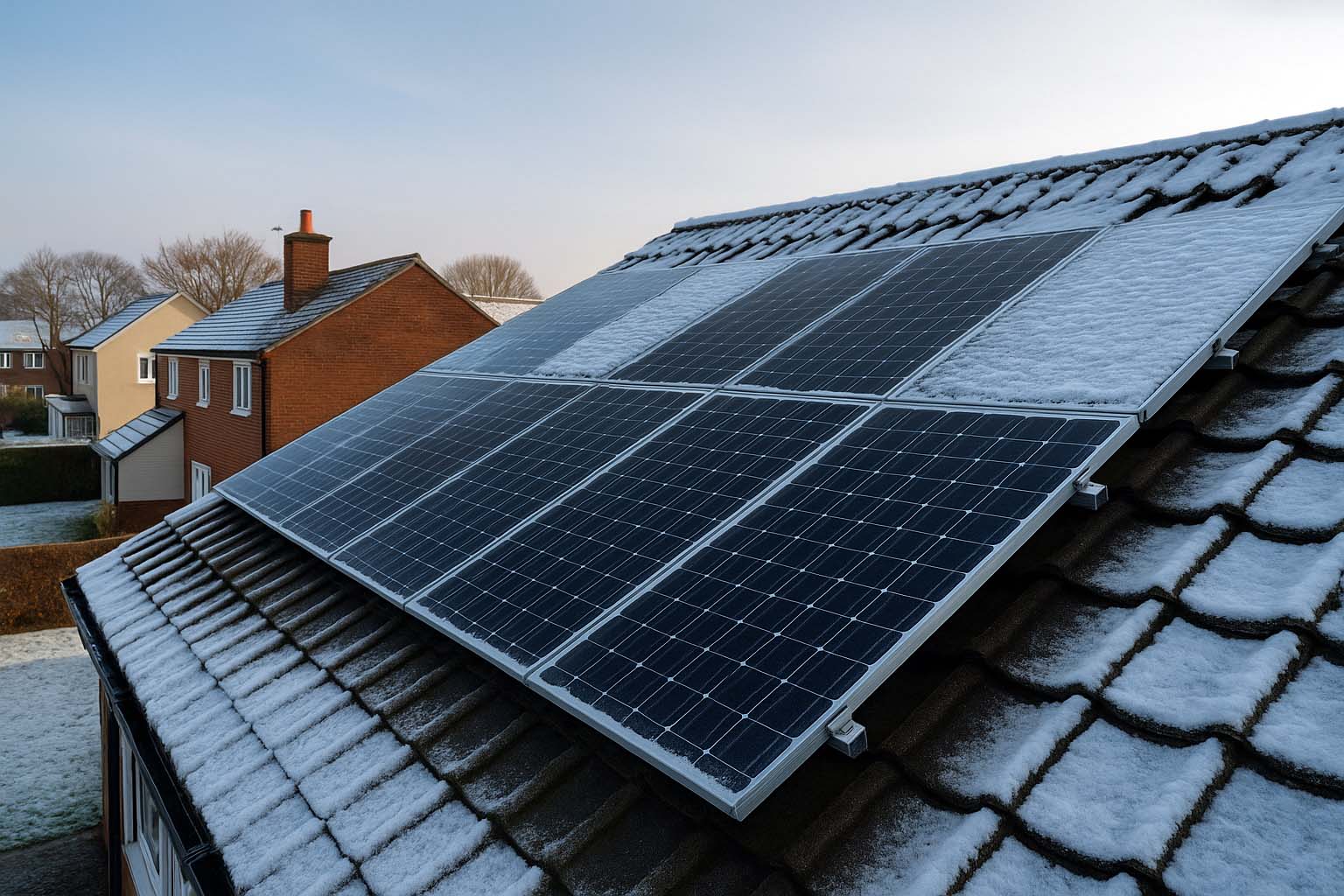
Solar panels generate electricity from daylight rather than direct sunshine, so they produce power throughout the year, not just in summer. Output is lower in winter when daylight hours are shorter, but a well-sized system generates meaningful electricity year-round. The South East’s climate makes it one of the better regions in the UK for solar performance.
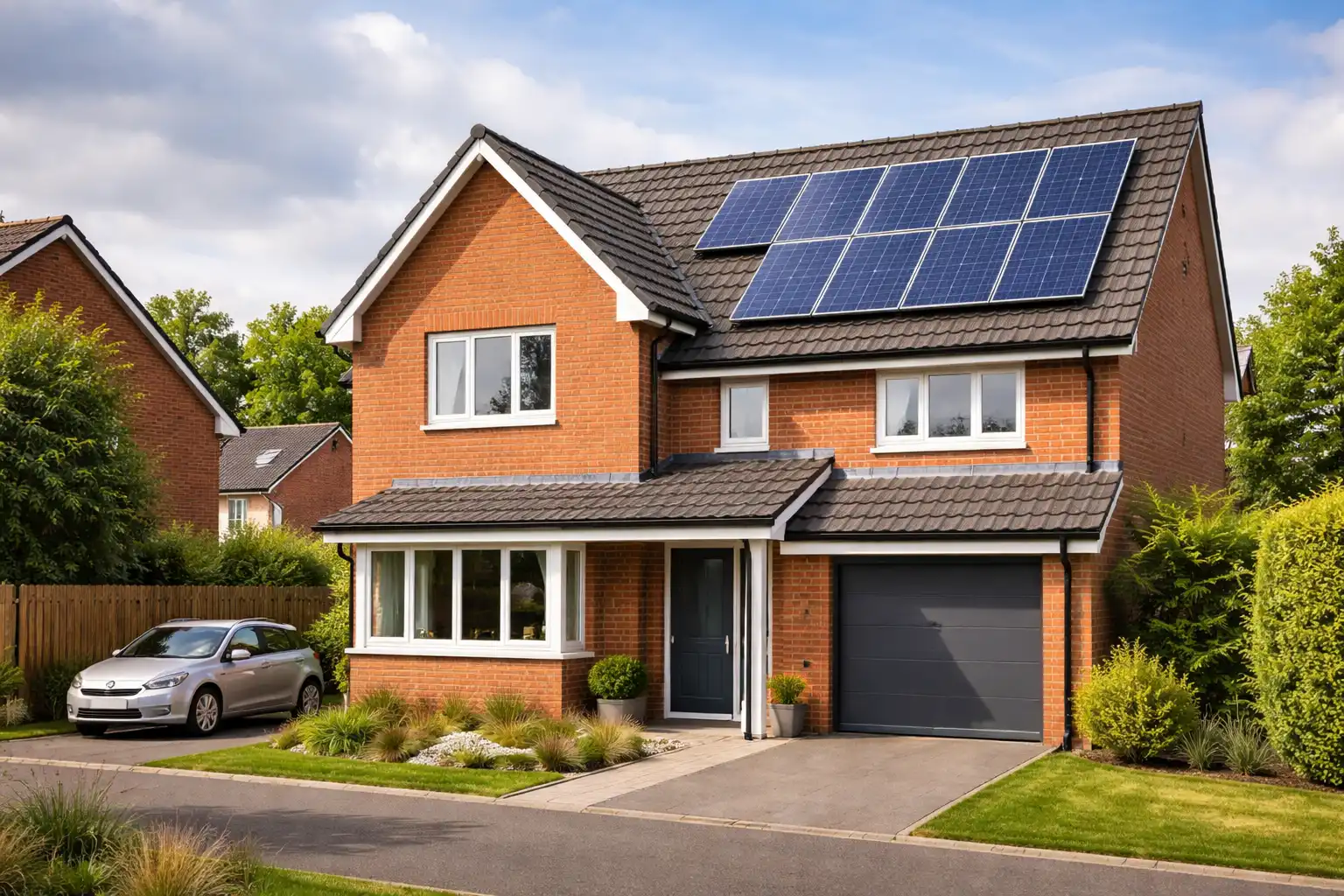
Most properties are suitable for solar panels. The key factors are:
Roof orientation. South-facing roofs produce the highest output. East and west-facing roofs generate around 15 to 20% less but still deliver a worthwhile return. North-facing roofs are generally not recommended as the primary installation surface.
Roof pitch. A pitch of 30 to 45 degrees is optimal. Shallower or steeper pitches will reduce output slightly but are not necessarily a barrier.
Shading. Trees, chimneys, and neighbouring buildings can all affect performance. A good installer will assess shading as part of the survey and factor it into the system design.
Roof condition. Solar panels have a lifespan of 25 years or more, so it is worth ensuring your roof is in good condition before installation. If your roof needs attention in the next few years, addressing that first makes sense.
Roof type. Most tile and slate roofs are suitable for a standard on-roof installation. If you prefer a flush, integrated finish, an in-roof solar system replaces a section of tiles and sits level with the roofline.
In most cases, no. Residential solar panel installations in England are generally covered by permitted development rights, meaning you do not need to apply for planning permission.
There are exceptions. If your property is a listed building, in a conservation area, or in an Area of Outstanding Natural Beauty, different rules may apply. Your local planning authority should be consulted if you are unsure.
Your installer should advise on this as part of the initial survey. If planning permission is required, a reputable installer will tell you upfront rather than letting you find out after the fact.
Installation costs vary depending on system size, panel type, roof access, and whether you are adding battery storage at the same time. As a general guide for UK homeowners in 2026:
These are indicative figures. The best way to get an accurate cost for your property is a free survey and quote from an MCS-certified installer.
On savings, a typical 4kWp system can save a homeowner between £400 and £650 per year without battery storage, and significantly more with a battery and a smart tariff. Our solar panel savings guide covers this in more detail.
A typical domestic solar panel installation follows these stages:
Survey. An installer visits your property to assess your roof, energy use, and suitability. This should be free and without obligation.
System design and quote. Based on the survey, the installer designs a system sized to your roof and consumption, and provides a written quote.
Installation day. Most domestic installations are completed in one to two days. Your installer manages the electrical work, mounting, and inverter installation.
Grid notification. Your installer notifies your Distribution Network Operator (DNO) that a solar system has been connected. This is a regulatory requirement and is handled on your behalf.
Smart Export Guarantee. Once live, you can register with an energy supplier offering SEG payments for any surplus electricity you export to the grid.
Choosing the right installer matters. Look for:
MCS certification. The Microgeneration Certification Scheme (MCS) is the industry standard for solar panel installers in the UK. MCS-certified installers meet defined quality and technical standards, and you need an MCS-certified installation to claim SEG payments.
RECC membership. The Renewable Energy Consumer Code provides additional consumer protections. Installers who are RECC members are bound by a code of practice covering sales, contracts, and aftercare.
Local experience. An installer based in or regularly working across Buckinghamshire will be familiar with local planning considerations, roof types, and DNO requirements in the area.
No-pressure sales approach. A reputable installer will give you honest advice about whether solar is right for your property and let you make the decision without pressure.
Battery storage is worth serious consideration, particularly if you are planning a new installation. Storing surplus generation rather than exporting it to the grid at a low rate means you use more of what you produce and reduce your reliance on grid electricity further.
If budget is a constraint, solar panels alone still make financial sense. Battery storage can be retrofitted to most existing installations at a later stage. With 0% VAT on battery storage until March 2027, there is a reasonable incentive to consider it sooner rather than later.
Oakpark Energy is based in Buckinghamshire and installs solar panel systems for homeowners across Buckinghamshire, Oxfordshire, Hertfordshire, Bedfordshire, Northamptonshire, Warwickshire, Cambridgeshire, Berkshire and the surrounding areas. We offer free, no-obligation surveys and will give you honest advice about what a system could deliver for your property, with no pressure to commit.
Figures are indicative and based on UK industry averages for 2026. Actual costs and savings will vary depending on your property, system size and energy use.