Cut your energy bills and generate your own clean electricity with a solar panel system designed around your home. Serving homeowners across the region.
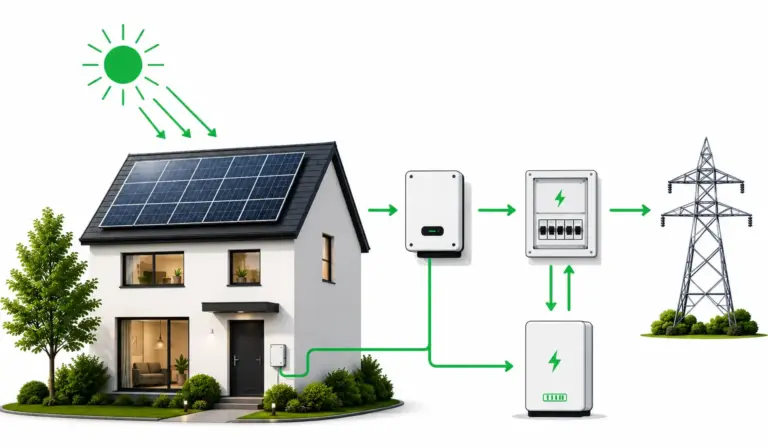
Solar panels are made up of photovoltaic (PV) cells that convert daylight into direct current (DC) electricity. An inverter fitted as part of the installation converts that into alternating current (AC), the type your home uses to power appliances, lighting, and heating.
Any electricity your home does not use immediately can either be exported to the grid for payment through the Smart Export Guarantee, or stored in a battery system for use later in the day. On a well-sized system, most households cover a significant proportion of their daily electricity use from their own generation.
Generate free electricity from daylight and reduce how much you draw from the grid. Most households see a meaningful reduction in bills from the day the system goes live.
Generating your own electricity insulates you from wholesale energy price rises. The more you self-generate, the less exposed you are to future tariff increases.
Any electricity you do not use can be exported to the grid through the Smart Export Guarantee (SEG). Your energy supplier pays you per unit exported, though rates vary so it is worth comparing tariffs.
Homes with solar panels are increasingly attractive to buyers. A well-installed system with documented output and remaining warranty is a tangible asset that can add to your property's value and appeal.
Solar panels generate clean electricity with no emissions during operation. Over a system's lifetime, the carbon savings are substantial, particularly as the grid itself becomes greener.
Solar panels have no moving parts and require minimal maintenance. Most systems come with a 25-year performance warranty and will continue generating beyond that.
Savings depend on system size, your household energy consumption, and how much of the generated electricity you use directly. As a guide, a typical 4kWp system on a south-facing roof can generate around 3,400 kWh per year, enough to cover a significant share of an average household's annual electricity use.
The Smart Export Guarantee (SEG) pays you for every unit of surplus electricity you export to the grid. Rates vary by energy supplier. Adding a battery storage system means more of what you generate stays in your home rather than going to the grid.
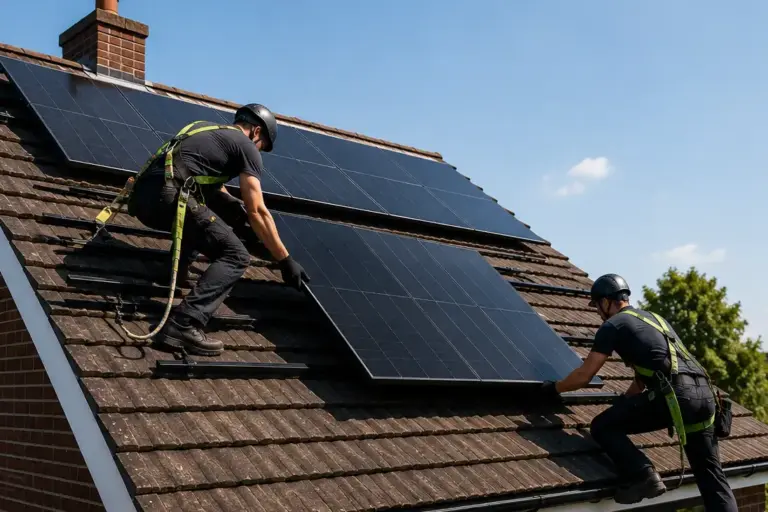
We are an MCS-certified installer and a member of the Renewable Energy Consumer Code (RECC), so your installation meets recognised industry standards and you are covered by consumer protections throughout. Our team is based in Buckinghamshire and handles every project directly, from initial survey through to aftercare.
The number of panels depends on your roof space, energy consumption, and the output of the panels specified. A typical domestic system is between 10 and 16 panels. We calculate the right system size during your survey based on your actual usage data.
In most cases, yes. South-facing roofs at a pitch of 30 to 45 degrees give the best output, but east and west-facing roofs still generate well. Shading from trees or neighbouring buildings can affect performance, which is why we carry out a full survey before recommending a system. We will tell you honestly if your roof is unsuitable.
In most cases, no. Residential solar panel installations are generally covered by permitted development rights. Exceptions include listed buildings and properties in conservation areas. We advise on this as part of your initial survey.
Most solar panels carry a 25-year performance warranty and will continue generating electricity beyond that. Inverters typically have a shorter lifespan of 10 to 15 years and may need replacing once during the life of the system.
Yes. We can retrofit a compatible battery storage system to most existing solar panel installations. See our home battery storage page for more detail.