Take control of your energy costs by storing what you generate and using it when it counts most. Serving businesses across the region.
A solar panel installation is a powerful first step. But what happens to the surplus energy your panels generate during the day? And how do you power operations when the sun goes down or during peak demand periods?
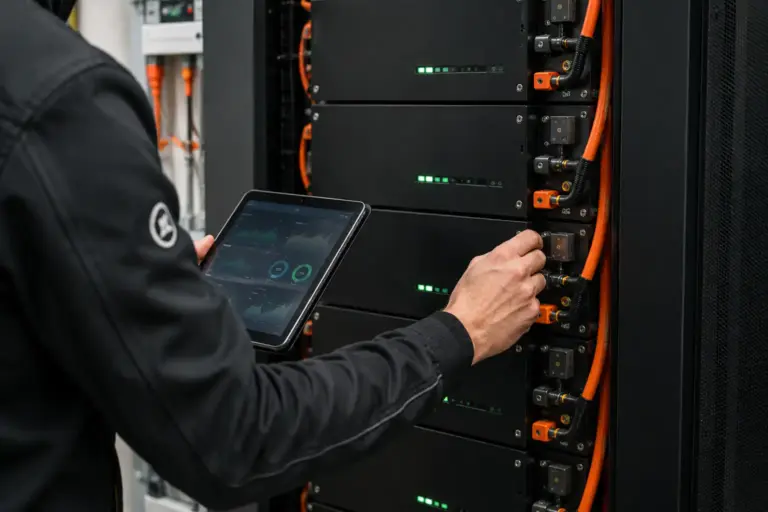
Commercial battery storage is the answer. Surplus generation is stored on-site and available to use in the evenings, overnight, or during periods of peak demand, reducing what you buy from the grid and protecting your business from volatile energy prices.

Commercial electricity tariffs often include demand charges based on peak consumption. Battery storage lets you discharge stored energy at those peak periods, which can meaningfully reduce your bills regardless of whether you have solar.
Charge your battery from the grid overnight at lower rates and discharge during the day when electricity costs more. A practical strategy for businesses with or without solar panels.
Surplus generation that would otherwise be exported at a low rate is stored on-site and used when it has greatest value, during evenings, on overcast days, or at periods of high demand.
Battery storage reduces your reliance on the grid and provides a degree of protection against supply disruptions for critical operations.
No. A battery system can be charged via an off-peak grid tariff independently of solar. However, combining solar panels with battery storage typically delivers the best financial return for most commercial sites.
Most businesses with meaningful electricity consumption will benefit, particularly those with solar panels, high daytime energy use, or operations that run into the evening. We carry out an energy assessment to confirm suitability and size the system correctly for your site.
Commercial systems are generally larger, may operate on a three-phase supply, and are often specified to manage peak demand charges as well as storing generation. Larger installations may also require a grid connection application.
Smaller commercial installations can typically be completed in one to two days. Larger systems with significant electrical infrastructure work will take longer and are planned to minimise disruption to your operations.